Most DTC teams we speak to aren’t new to SEO.
They’ve already worked with agencies, published content, and fixed a few technical issues. And still, organic traffic either plateaus or grows in ways that don’t translate into revenue.
That’s usually where the frustration starts. You’re putting in effort, but you can’t clearly tie it back to sales. And worse, every SEO partner seems to have a different explanation for why things aren’t working.
We’ve been on the other side of that conversation enough times to know the pattern.
Across the Shopify brands we work with, the issue is rarely “SEO doesn’t work.” It’s that the approach is fragmented:
- Technical fixes happen in isolation.
- Content gets published without direction.
- Links are either ignored or treated as a volume game.
This piece breaks down how that changes when those pieces are actually connected.
We’re going to walk through six Shopify SEO case studies. What broke, what we changed, and how that translated into growth. If you’ve been burned by vague strategies before, this should feel a lot more concrete.
Why Shopify SEO Delivers Compounding ROI
Before we get into the Shopify SEO case studies, it helps to reset how Shopify SEO actually works.
Most SEO playbooks were built for content-first websites. You publish blog posts, target informational queries, and grow traffic over time. Conversions are often secondary.
Shopify flips that model.
Your most important pages are collections and products. These are bottom-of-funnel pages that need to rank and convert. At the same time, the platform introduces structural constraints that make this harder than it looks.
Here’s where the difference becomes clear:
| Traditional SEO | Shopify SEO |
| Blog-first strategy | Collection and product-first strategy |
| Targets informational queries | Targets buyer-intent queries |
| Traffic is the main KPI | Revenue is the main KPI |
| Content drives growth independently | Content supports revenue pages |
| Simple site structures | Complex structure with duplicates and filters |
| Fewer indexation issues | Frequent duplication and crawl challenges |
| Conversions happen later | Conversions happen on ranking pages |
Because of this, growth on Shopify is about getting the system right.
Most DTC brands we speak to are already putting in effort. There is content being published. Technical fixes are being made. Some traffic is coming in.
But it is not translating.
Traffic is mostly branded or top-of-funnel. Collection pages are not ranking for high-intent terms. Product pages depend heavily on paid channels. And internally, it is hard to connect SEO work to revenue.
SEO starts feeling unpredictable when the pieces operate separately. Alignment is what changes that.
Technical SEO makes sure the right pages are crawlable, indexable, and prioritized. Content is mapped to intent and built to support collections and products. Links reinforce authority around those same pages, instead of being treated as a separate effort. None of these are new ideas on their own.
None of these are new ideas on their own. But when they work together, and everything points toward revenue‑driving pages, Shopify SEO starts to compound.
Compounding looks like this: a collection page ranks for one mid-intent term, earns a few links from the supporting content, climbs into the top 3, captures a wider keyword footprint, and starts pulling revenue from terms it was never explicitly optimized for. Every new piece benefits from the foundation under it. Six months in, the numbers don’t just hold. They accelerate.
1. VIM&VIGR: From SEO Frustration to Ecommerce Momentum
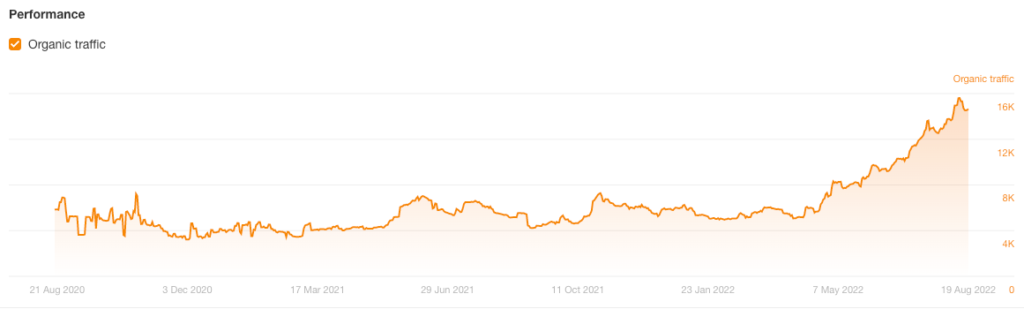
VIM&VIGR, an up-and-coming leader in fashionable compression legwear, came to Break The Web after multiple failed attempts to make SEO work. Previous efforts with another agency had resulted in wasted time and no meaningful traction. With a new Marketing Director in place and a clear mandate to grow, the goal was straightforward: increase non-branded organic traffic, clicks, and revenue.
Audit and Discovery – Keyword Gaps, Architecture, and Missed Non-Branded Opportunities
The first step was understanding where things stood.
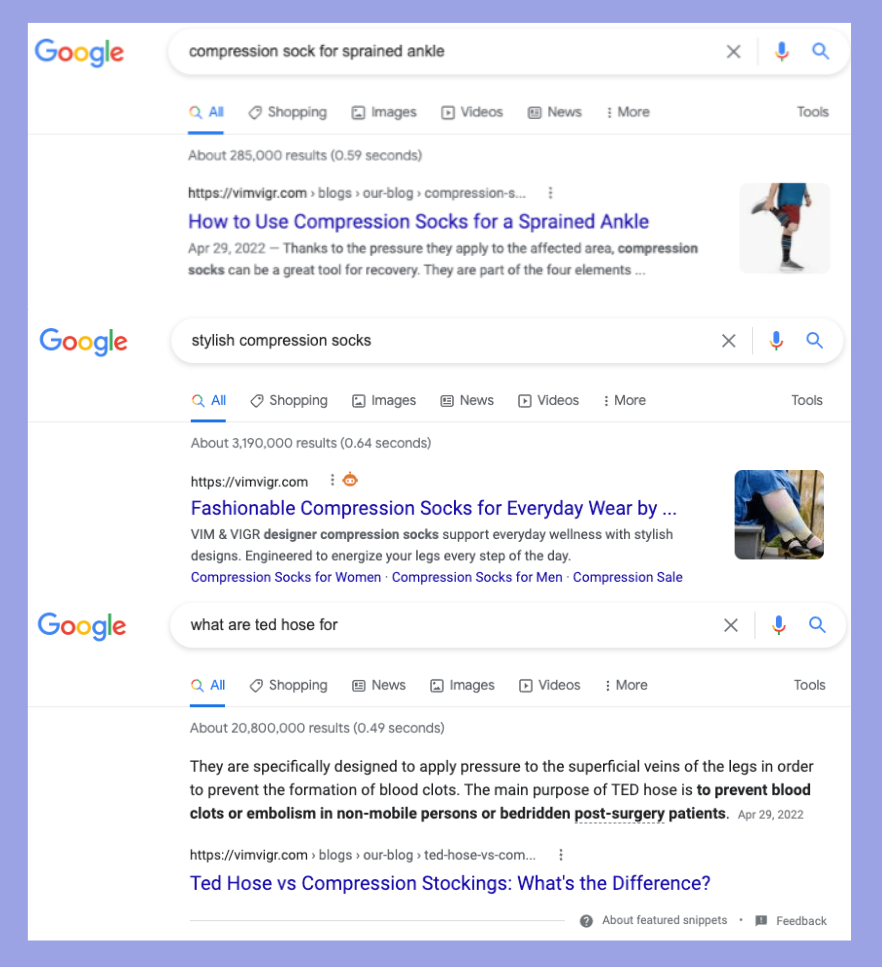
Keyword and opportunity research identified gaps in organic performance and surfaced high-intent queries the site was not competing for. A technical Shopify SEO audit located backend issues affecting crawlability and visibility. Competitive analysis mapped out transactional and informational keyword opportunities across the compression sock space, and an information architecture review revealed redundancy issues that were diluting SEO equity across the site.
Strategic Build – PDPs, Content, Digital PR, and Architecture Overhaul
With the landscape mapped, the work covered every layer of the site:
- Product and collection pages were optimized to compete, engage users, and drive conversions.
- A content strategy and development program was built around wellness, pain management, and sports themes relevant to Vim&Vigr’s target audience.
- On-page SEO balanced brand voice with user-intent signals, trust elements, and rich results markup.
- Link building and digital PR targeted fashion and wellness publications to build thematic authority.
- Google Merchant Center and Shopify product feeds were optimized for Google Shopping and Free Listings.
- Internal linking and information architecture were overhauled to eliminate redundancy and distribute SEO equity more effectively across the site.
Results – 400% Organic Traffic Growth in 6 Months, 608% Over the Long Term
The results did not arrive all at once, and that is the point.
Within the first six months, VIM&VIGR saw a 400% increase in organic search traffic and a 21% increase in conversion rate. Those are strong early numbers on their own, but what makes this case study more instructive is what happened next.
Rather than plateauing, the numbers kept climbing. Over the longer term, organic traffic growth reached 608% and conversion rate improvement compounded to 54%. This is the nature of SEO done correctly: the foundation work does not expire. Authority accumulates, indexed content continues to earn clicks, internal linking compounds relevance, and each new piece of content benefits from the domain strength built before it.
For VIM&VIGR, that compounding effect showed up across multiple competitive page-one keyword positions and translated into sustained increases in brand awareness, purchases, and revenue.
What This Means for Your Store
When SEO isn’t working, the answer is rarely more content in isolation.
“It’s important for me to work with vendors that are efficient and easy for me to communicate with. There’s a whole other side of Break The Web, this user-experience idea that not only makes it easier for Google but also easier for people to browse through the store.”
— Teresa Zortman | Marketing Director, VIM&VIGR
VIM&VIGR’s growth came from fixing how search engines crawl and interpret the site, identifying the right keyword opportunities at the right intent level, and then building content and authority on top of a properly structured foundation. The six-month results proved the strategy was working. The long-term results, 608% organic traffic growth and a 54% conversion rate increase, proved that when the system is set up correctly, the results do not just hold, they compound.
You can read the full VIM&VIGR SEO Case Study.
2. Gisou: From Launch Limbo to Global Shopify SEO Growth
Gisou, the global beauty brand built around honey-infused hair, face, and body products, had all the signals of a fast-growing label. Strong social traction, high brand interest, and consistent demand.
Non-branded traffic was minimal. New users weren’t discovering the brand through search, especially in markets like the US, where brand awareness was still developing. Growth was happening, but SEO wasn’t contributing in a meaningful way.
What the Audit Showed – Unoptimized Collections and Undirected Content
The audit showed that the issue was structural and directional. Product and collection pages weren’t optimized for search intent, which limited their ability to rank beyond branded queries.
Content existed, but it wasn’t mapped to specific keywords or funnel stages, so it wasn’t supporting key pages. There were also clear gaps between regions, with no focused strategy for US and EU search behavior.
As a result, the site wasn’t sending strong signals about what it should rank for or where it should grow.
How We Rebuilt It – International SEO, PLP/PDP Optimization, and Beauty Content Clusters
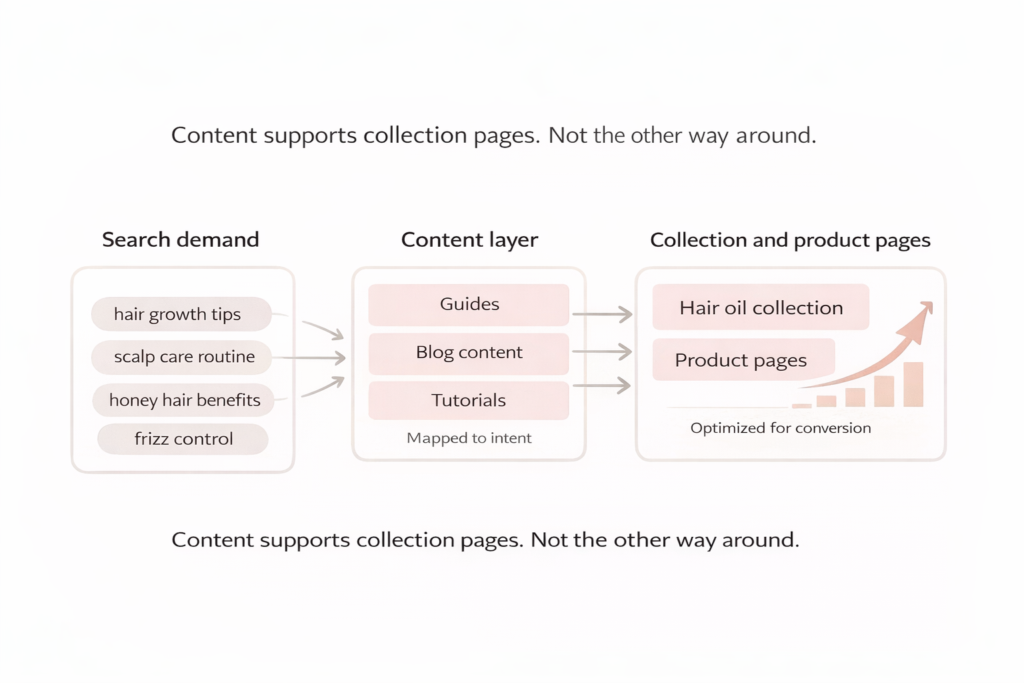
We started by aligning product and collection pages with how people actually search.
Key pages were optimized around category-level and product-intent queries, with improvements to structure, metadata, and internal linking. This helped search engines better understand page relevance and priority.
From there, content became the growth driver.
We built out a content clusters strategy around beauty and skincare topics that directly connected to product categories. Each piece was designed to capture non-branded demand and pass relevance back to collection and product pages through internal linking.
This created a system where content didn’t sit in isolation. It actively supported revenue-driving pages.
What Compounding Looked Like – 1,365% Global and 1,258% Non-Branded Surge
Once the structure and content were aligned, the compounding results were seen in Gisou SEO growth.
Gisou saw a 1,365% increase in global organic traffic, with a 1,258% surge in non-branded clicks specifically – the cleanest signal that the strategy was working in the markets where the brand had no prior search presence.
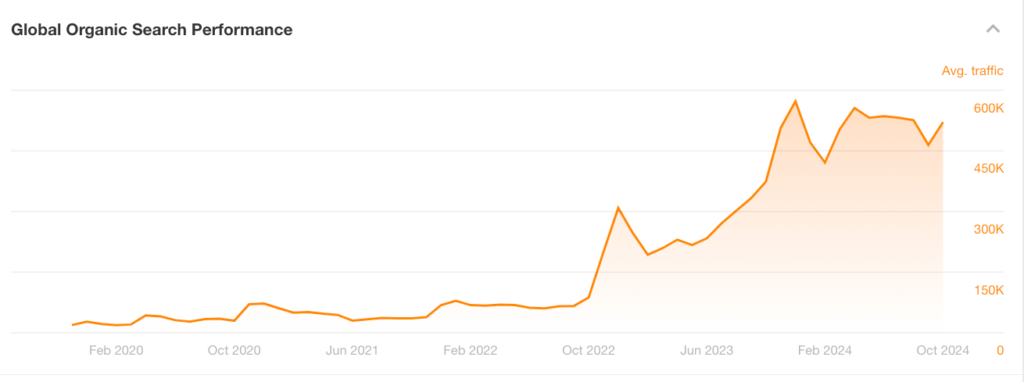
Search went from being a passive channel to a consistent acquisition driver.
Lessons You Can Steal for Your Store
If your brand is expanding into new markets, content needs to do more than exist. It needs direction.
When content is mapped to search intent and connected to product and collection pages, it becomes a scalable way to enter new markets and capture demand beyond branded search.
For the full breakdown of how international SEO and beauty content clusters drove that 1,365% global traffic surge, read the Gisou SEO growth story.
3. clé: Fixing Shopify Migration SEO for a Luxury Tile Brand
clé is a luxury artisan tile brand known for handcrafted surfaces and elevated interior design aesthetics. But after migrating from Magento to Shopify, the brand saw a sharp decline in organic visibility for some of its most valuable commercial terms, including “cement tile” and “terrazzo tile.”
For a business heavily dependent on discovery during the renovation and design research phase, that visibility loss directly impacted qualified traffic and sales.
A New Platform, a Crumbling Search Presence
The migration was supposed to be the upgrade story. Cleaner Shopify setup, faster experience, better foundation. Instead, it fractured years of accumulated search equity almost overnight.
The issue was not demand. People were still searching for artisan tile products. The problem was that clé’s search presence no longer reflected the authority the brand had built in the luxury decor space.
Previous SEO work had also left behind technical debt that compounded the decline after migration.
What the Audit Uncovered – Duplicate URLs, Broken Architecture, Missed Collections
The audit revealed hundreds of duplicate URLs (a familiar Shopify pattern, where tag-based filters and product-variant URLs spin up duplicate versions of high-value collection pages), weak internal linking, and bloated site architecture that diluted authority across important collections.
At the same time, there were major keyword gaps in core commercial categories. Search engines were struggling to understand which collection pages should rank for high-intent searches tied to renovation and architectural design.
The result was a site with strong products and brand positioning, but weak SEO signals.
Rebuilding From the Ground Up – From Bloated Site to Luxury SEO Engine
The recovery focused on simplifying and strengthening the entire SEO foundation.
Collection pages were rebuilt around commercial search intent, with improvements to metadata, hierarchy, and internal linking.
Important commercial collections were buried too deep in the site structure, forcing authority to spread across duplicate and overlapping paths. Reworking the architecture allowed category pages to consolidate their relevance rather than compete with each other.
Instead of publishing broad inspiration-led content, the strategy shifted toward supporting high-intent collection pages with searches tied to renovation planning, material comparisons, and architectural sourcing. The goal was to capture buyers while they were narrowing product decisions.
Merchant Center and Shopify product feed optimization further improved visibility across shopping-focused search surfaces.
The Search Results That Followed – Artisan Tiles Back on Page One
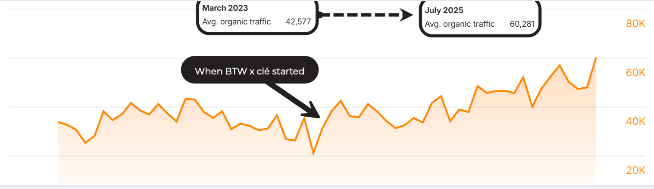
As the technical cleanup and content strategy started working together, clé steadily reclaimed its organic visibility.
The brand saw a 178% increase in organic search revenue, alongside a 36% increase in organic sessions, a 250% increase in organic conversions, and a 34% increase in search clicks.
More importantly, key commercial collection pages regained visibility for the searches that directly drove revenue.
How to Protect Your Shopify Store During a Migration
Platform migrations can either strengthen SEO momentum or erase years of accumulated authority.
For ecommerce brands on Shopify, collection page structure, internal linking, and information architecture play a major role in whether high-intent pages continue ranking after migration.
To see how the architecture rebuild and PLP strategy translated into 178% organic revenue growth, read the full clé case study.
4. Because Market: Reducing CAC with Non‑Branded Shopify SEO Clusters
Because Market is a DTC senior wellness brand focused on products for older adults, particularly incontinence pads and underwear, a category where trust, education, and customer acquisition costs all collide.
The company already had strong growth momentum. Paid acquisition and offline advertising were driving awareness, and the internal marketing team had built an impressive growth engine.
But there was a problem sitting underneath that momentum.
The brand was scaling faster than its organic foundation.
A Growing Brand Held Hostage by Paid Spend
By the time Because Market brought in Break The Web, paid channels were doing most of the heavy lifting.
That worked while budgets scaled efficiently. But as customer acquisition costs continued rising across DTC, the team knew they needed a more sustainable way to grow, especially in a category where repeat purchases and long customer lifecycles made organic acquisition strategically important.
Most organic traffic came from people already familiar with the brand, while competitors dominated the searches happening earlier in the buying journey. High-intent searches around senior wellness, bladder leaks, overnight protection, and caregiving concerns were consistently sending traffic elsewhere.
Which meant Because Market was missing users before brand consideration had even started.
Audit Revelation – Content Gaps and Crawl Issues Handing Market Share Away
The audit revealed that the biggest issue was not authority or product quality.
It was that competitors had become the educational layer between the customer problem and the purchase decision.
People searching in this category rarely begin with a product name. They search through situations first:
- how to manage incontinence for aging parents
- overnight leakage solutions
- best products for older adults
- differences between pads, underwear, and protective layers
Because Market’s content footprint around those topics was still thin, leaving competitors to capture non-branded demand at the exact stage where trust and discovery were forming.
At the same time, crawlability issues and disconnected content structure made it harder for search engines to understand topical relevance across the site. Existing pages were not reinforcing each other, which limited the site’s ability to compound authority over time.
Strategic Overhaul – Senior Wellness Clusters That Own Non-Branded Search
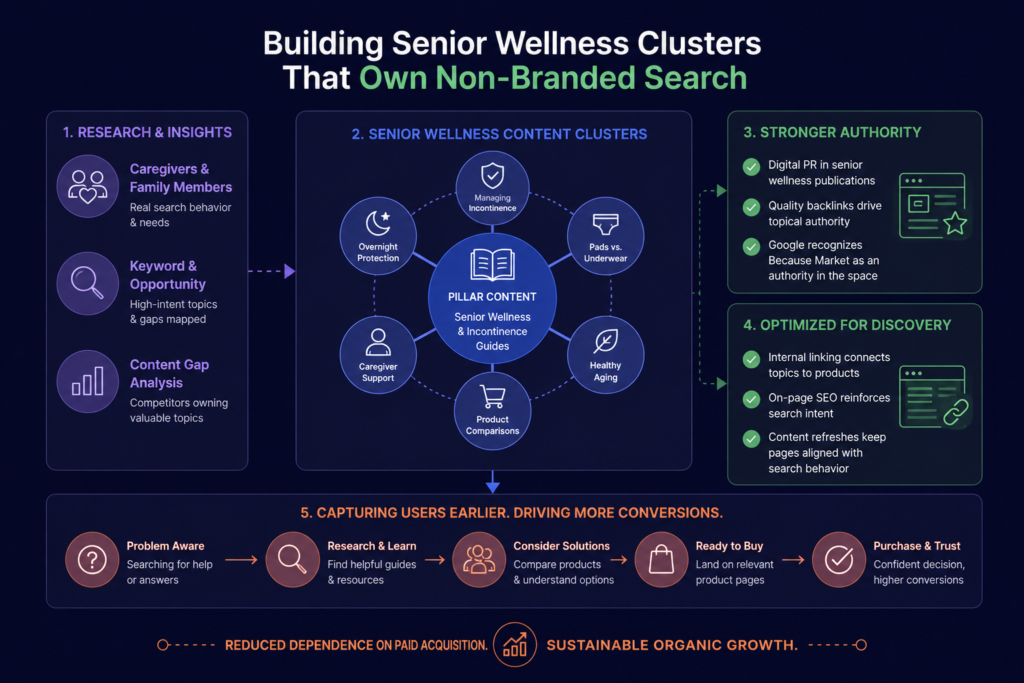
The strategy shifted away from isolated keywords and toward building topical authority around the full senior wellness journey.
Keyword and opportunity research mapped how caregivers, older adults, and family members actually searched online.
Instead of publishing standalone blog posts, the strategy connected educational content directly back to commercial pages tied to incontinence products and senior wellness solutions. Internal linking, on-page SEO, and thematic optimization all reinforced the same search intent layers.
That alignment mattered.
As topical coverage deepened, something shifted in how Google read the site. Because Market stopped being just a product store competing on branded demand. It became the place senior wellness searches actually pointed to.
Digital PR campaigns in senior wellness and caregiving publications further strengthened that authority, while content gap analysis and refreshes helped older pages better align with current search behavior.
The result was a system designed to capture users earlier, guide them through the decision journey, and reduce long-term dependence on paid acquisition.
Traffic Revival – 1,466% Increase in Non-Branded Clicks and a New Organic Engine
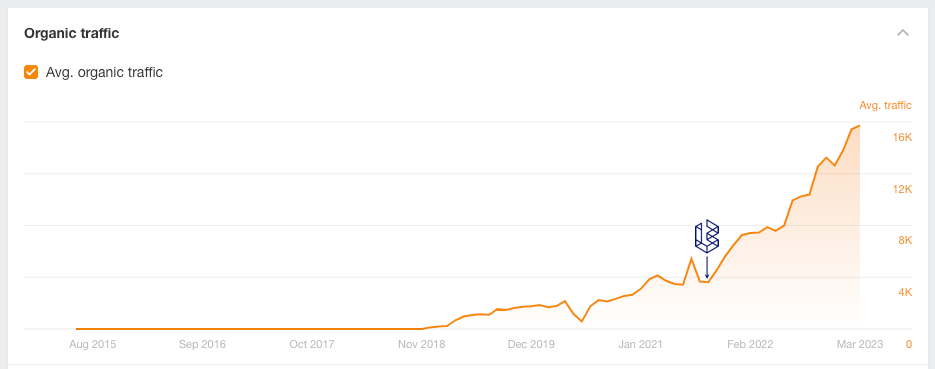
As the content ecosystem matured, Because Market started capturing the kind of traffic that previously belonged to competitors.
The brand achieved a 1,466% increase in non-branded clicks, alongside a 110% increase in year-over-year organic traffic and a 905% increase in traffic value.
More importantly, SEO evolved from a supporting channel into a meaningful acquisition engine.
The business was no longer relying almost entirely on paid media to create growth momentum. Organic search had become a scalable channel capable of bringing in qualified customers earlier in the buying journey.
Lessons for Your Shopify Store
For many DTC brands, paid acquisition works well until efficiency starts tightening.
The brands that scale more sustainably are usually the ones that build visibility before branded demand exists. When content clusters, technical SEO, and topical authority work together, SEO stops behaving like isolated traffic generation and starts compounding into a long-term acquisition channel.
For a deeper look at the content cluster and technical work behind that 1,466% non-branded click growth, read the full Because Market case study.
5. JubileeTV: Outranking Amazon with PDPs, Caregiver Content, and Shopping
JubileeTV is a senior technology brand built around a simple but emotionally important idea: helping families support aging loved ones remotely through an easier TV experience.
A Unique Product, but Amazon Was Winning the Search
Before working with Break The Web, JubileeTV had recently shifted from a B2B licensing model to a direct-to-consumer business.
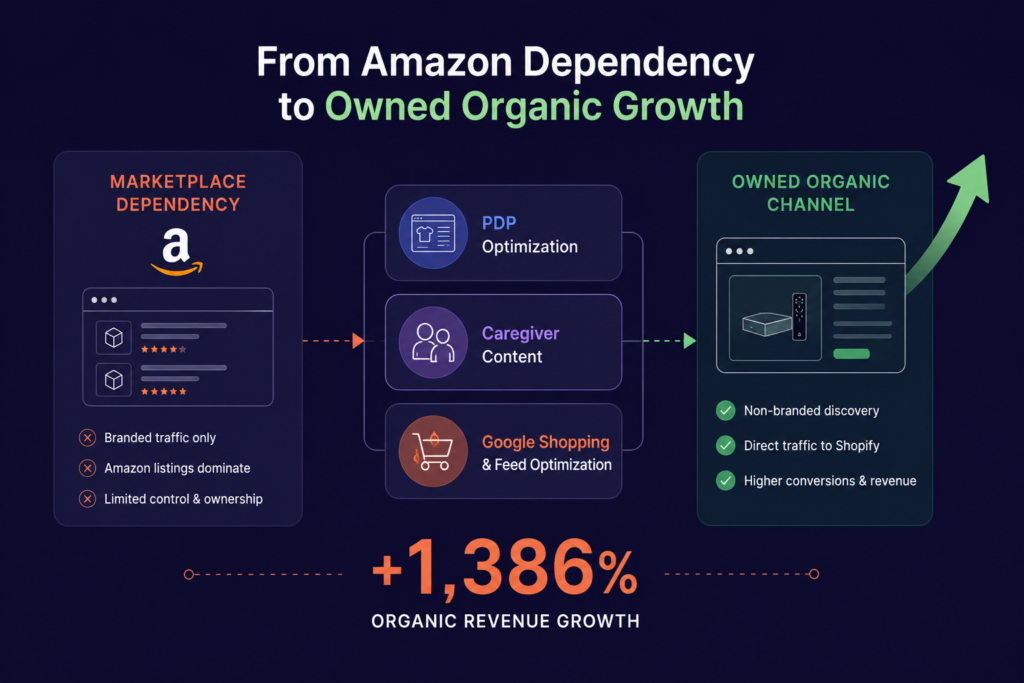
The problem was that their SEO foundation had never been built for DTC growth. Organic visibility leaned heavily on branded searches, while Amazon captured a large share of product-intent demand. People searching for solutions related to senior-friendly TVs, dementia support, and caregiver technology were often discovering marketplace listings before the brand itself.
For a company trying to build a sustainable direct channel, that dependency created a ceiling.
The challenge became even harder because the site was already in the middle of a platform migration, while the internal team was operating lean and focused on growth execution.
What We Found When We Dug Into the Site – A Mid-Migration Site With No SEO Foundation
The audit showed that the migration had introduced technical debt across the site, while important SEO fundamentals were still missing. Product pages were thin, with limited contextual information, helping them compete for non-branded searches. The site also lacked content aligned with how caregivers and family members actually searched for solutions online.
Buyers were not always searching for a product category directly. Many were searching through emotional and practical problems first, phrases connected to dementia care, helping aging parents stay connected, or simplifying technology for seniors.
Those searches represented high-intent opportunities that JubileeTV was not capturing.
Strategic Overhaul – Caregiving Content, PDPs, and Outranking Amazon
The strategy focused on building a direct organic acquisition engine instead of relying on marketplaces to carry demand.
- Product pages were expanded and optimized to better communicate use cases, trust signals, and search relevance. Rather than treating PDPs as thin ecommerce assets, they became conversion-focused landing pages capable of competing for high-intent searches.
From there, the content strategy centered around caregiver and family search behavior. Instead of broad health-tech content, the focus shifted toward the real questions families ask when supporting aging parents.
- Content clusters were built around senior living, dementia care, remote connection, and accessibility challenges, creating stronger topical relevance around the exact problems JubileeTV solved.
- At the same time, digital PR campaigns in senior care and wellness publications helped reinforce authority in a category where trust strongly influences conversions.
- Merchant Center and Shopify product feed optimization also became a major growth lever. Improving visibility in Google Shopping and Free Listings helped JubileeTV compete more directly against Amazon on transactional searches, while driving more users into an owned sales channel.
Underneath all of this, the site architecture was reworked to better distribute authority across products, collections, and supporting content.
The Results – 1,386% Revenue and a Self-Sustaining Organic Channel
As the SEO foundation matured, JubileeTV started capturing demand that previously bypassed the brand entirely.
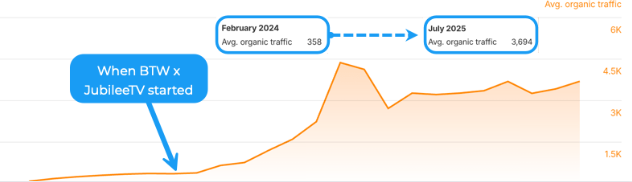
Organic sessions increased by 318%, while organic revenue grew by 1,386%. Organic conversions increased by 385%, alongside a 255% increase in search clicks.
More importantly, the company built a significantly more self-sustaining acquisition channel through its Shopify storefront instead of relying primarily on Amazon visibility.
Search was no longer just supporting the business. It had become one of its growth engines.
Lessons for Brands Competing Against Marketplace Giants
DTC pivots need non-branded SEO from the beginning.
If your visibility depends mostly on branded demand or marketplaces, growth eventually becomes constrained by channels you do not control. Building search visibility around customer problems, product-intent queries, and shopping surfaces creates a stronger long-term acquisition channel, even in markets where Amazon already dominates.
If your brand is competing against Amazon or marketplace dominance, read the full JubileeTV case study to see how PDP optimization and caregiver content changed the equation.
6. Organic Vitamins: From Rank Rut to Remedy Reign
Organic Vitamins is a DTC supplement brand focused on natural, health-first products, operating in a category where search is both highly competitive and highly scrutinized. In wellness, ranking depends on trust, authority, and how clearly your site signals expertise to both users and search engines.
Organic Vitamins wasn’t starting from zero when they reached out to us.
The site had content, a functional store, and some level of visibility. But rankings had stalled. High-intent keywords were dominated by larger brands, and the traffic that did come in wasn’t converting at the level it should have.
Internally, it felt like effort without movement.
Audit Revelation – Content Gaps and Crawl Issues in a Hyper-Competitive Category
The audit showed that the issue was how the site was structured and how authority was distributed.
Collection pages were siloed, with a limited eCommerce internal linking strategy and weak connections to supporting content. This made it harder for search engines to understand which pages should rank for key supplement-related queries. Authority was spread thin, with no clear hubs reinforcing topical relevance.
At the same time, long-tail opportunities were being missed. The site wasn’t capturing specific, high-intent searches that could have driven qualified traffic.
Strategic Overhaul – Information Architecture, On-Page Relevance, and Wellness Backlinks
We approached this in layers.
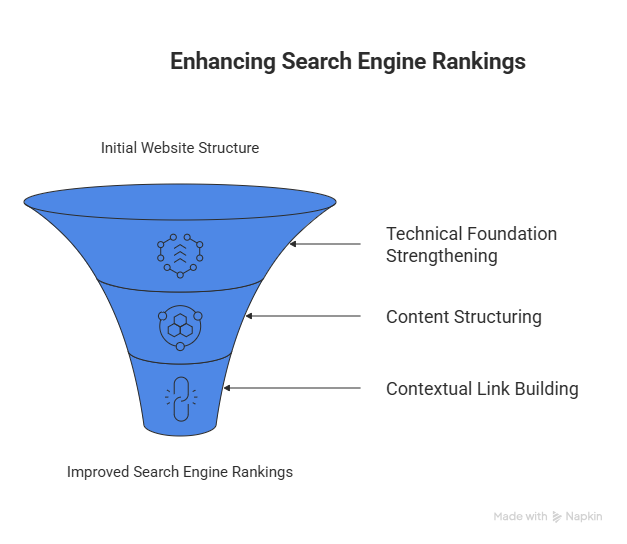
First, we strengthened the technical foundation. Over 50 schema updates were implemented across product and collection pages to improve how search engines interpreted key information.
Then we built structure into the content.
Instead of isolated posts, we developed supplement-focused clusters, each designed around a specific category and supported by 10 or more content briefs. These clusters were tightly connected to collection pages through internal linking, helping consolidate relevance and authority.
At the same time, we focused on contextual link building.
Rather than chasing volume, links were earned from relevant sites with strong authority (DA40+), reinforcing the same topics we were building internally. This alignment between content, internal linking, and external authority is what allowed rankings to move in a competitive space.
Where the Growth Showed Up – 269% Organic Growth, #3 Rankings, and 61 Links Built
As authority consolidated and coverage expanded, rankings started to shift.
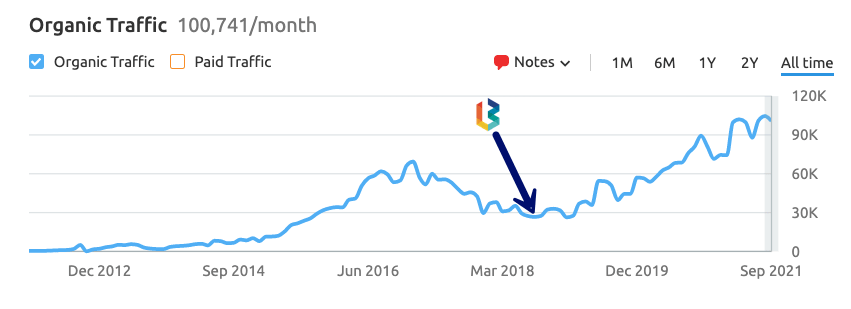
Organic Vitamins saw almost 270% increase in qualified organic traffic, with improvements concentrated around high-intent queries. More importantly, this translated into sustained return on ad spend, as organic began to support and reduce reliance on paid channels.
Growth came from the system working together.
Lessons for Your Store
In competitive DTC categories, content alone isn’t enough, and links alone won’t carry you either.
What works is building clear topic hubs and reinforcing them through internal structure and external authority. When those pieces align, even crowded markets start to open up.
For the complete picture of how IA improvements and wellness backlinks unlocked 269% organic growth in a hyper-competitive category, read the full Organic Vitamins case study.
What These Cases Teach Your Shopify Store
If you step back, all six stories follow a similar pattern.
Different brands, different growth stages, different problems — but the same underlying issue: SEO was operating in fragments instead of as a system. Once the technical foundation, content strategy, and authority building started reinforcing each other, growth stopped feeling unpredictable.
Here’s what actually moved the needle across these Shopify SEO case studies:
- Technical audits de-risk migrations and unlock growth: Vim&Vigr and Clé both had structural issues limiting visibility. Once crawlability, architecture, and internal linking were fixed, rankings and revenue started compounding instead of stalling.
- Directed content captures non-branded demand: Gisou and Because Market grew by aligning content with how customers actually search, not just what the brand wanted to publish. Mapping content to intent created scalable acquisition beyond branded traffic.
- Strong information architecture helps Shopify stores compete in crowded categories: Organic Vitamins improved rankings by building focused topic hubs, strengthening internal linking, and consolidating authority around high-intent searches.
- DTC brands need owned organic channels, not platform dependence: JubileeTV’s growth came from reducing reliance on Amazon and building direct visibility through content, product pages, and Google Shopping optimization.
- SEO compounds when channels support the same goal: Technical SEO, content, internal linking, digital PR, and shopping optimization worked because they reinforced the same revenue-driving pages instead of operating independently.
- Clarity beats volume: None of these brands grew because they published more for the sake of it. Growth came from prioritization, alignment, and building systems that connected SEO work directly to revenue outcomes.
If you’re looking at your own store and unsure where to start, that’s usually a signal that the system isn’t clear yet. We handle this with simple, shared roadmaps inside Slack so your team always knows what’s being worked on, why it matters, and what to expect next.
Does This Sound Like Your DTC Challenge?
If you’ve made it this far, you’ve probably seen parts of your own store in these Shopify SEO case studies.
Traffic that looks fine on the surface but does not convert. Content that exists but does not support revenue pages. Technical fixes that get implemented but never fully move rankings.
Most teams we work with have already tried a few things before reaching out. The hesitation usually is about whether it will work this time, with a clear line to revenue.
That is exactly where we focus.
We look at what is actually holding performance back, align technical SEO, content, and links so they work toward the same outcome, and make sure you can see how that translates into growth.
If you want a second set of eyes on your setup, that’s what our discovery calls are for. Not salesy. No contracts. Just a strategy-first conversation about what’s actually holding your store back, and what we’d prioritize if it were ours.
Shopify SEO That Makes Great Case Studies
Strategic SEO involves a deep understanding of Shopify and its unique capabilities. Our 15+ years in SEO can help you show the measurables that make great case studies